Retrofit and custom manufacturing go hand in hand. Retrofit gives a second life to existing machines, vehicles, and industrial systems by replacing obsolete, unavailable, or non-compliant components, without rebuilding everything from scratch. Like some kind of reincarnation, but for material equipment 🙂
Very quickly, one reality becomes obvious: retrofit is impossible without custom part manufacturing. It’s like renovating an old apartment without cutting planks to specific dimensions….barely impossible!
Whether we are talking about electric vehicle conversion kits or the modernization of special industrial machines, custom manufacturing,especially CNC machining,is not a nice-to-have. It is the core enabling technology behind every successful retrofit project.
What is Retrofit?
Back to basics: retrofit means modernizing an existing system while keeping its main structure intact. Some components are kept while others are dismantled in order to be replaced or renovated. This practice, already very much common in the defense & aerospace sector with the need to maintain planes or vehicles over long periods of time, has become more frequent in the automotive and machinery sectors.
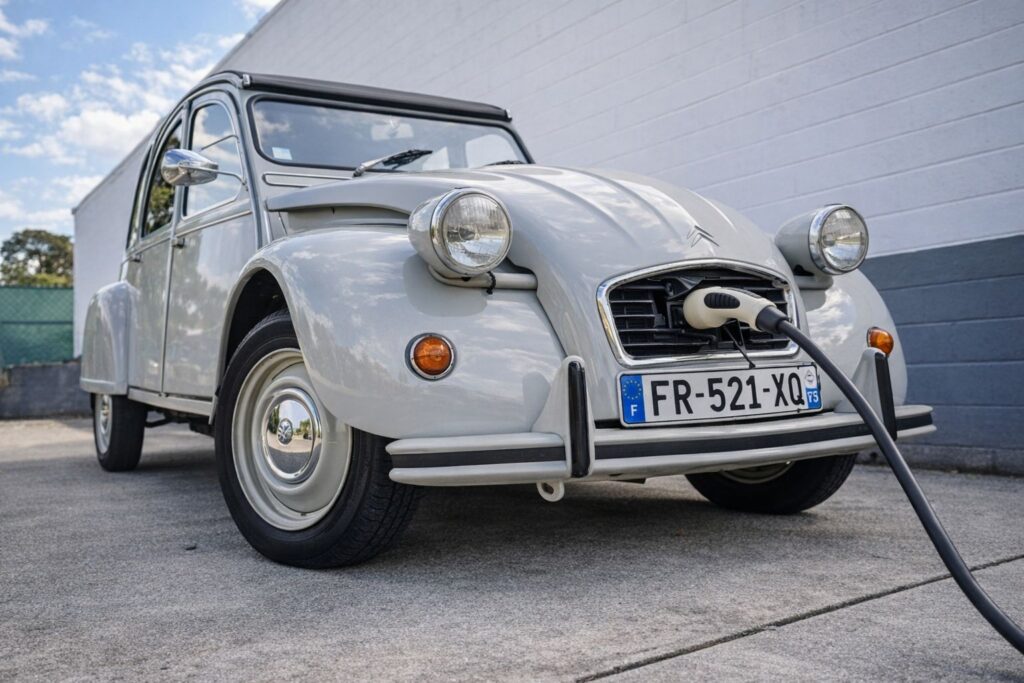
For cars, the electrification steps are pretty straightforward (and must be done with an existing approved electrification kit):
- replacing the internal combustion engine with an electric powertrain
- adapting transmission, mounting points, and braking systems
- integrating batteries, power electronics, and cooling systems in the vehicle
For industrial machines, the idea is very similar:
- replacing obsolete control systems and connected mechanical parts
- adapting new sensors, motors actuators and new mechanical components to the existing skeleton
- upgrading safety and compliance according to newest standards
In every single case, retrofit creates a mechanical mismatch between what already exists and what is newly installed. That gap is always closed with custom-made mechanical parts.
How to do a retrofit?
A retrofit project always follows the same core logic, regardless of whether it’s a car, a boat, or an industrial machine.
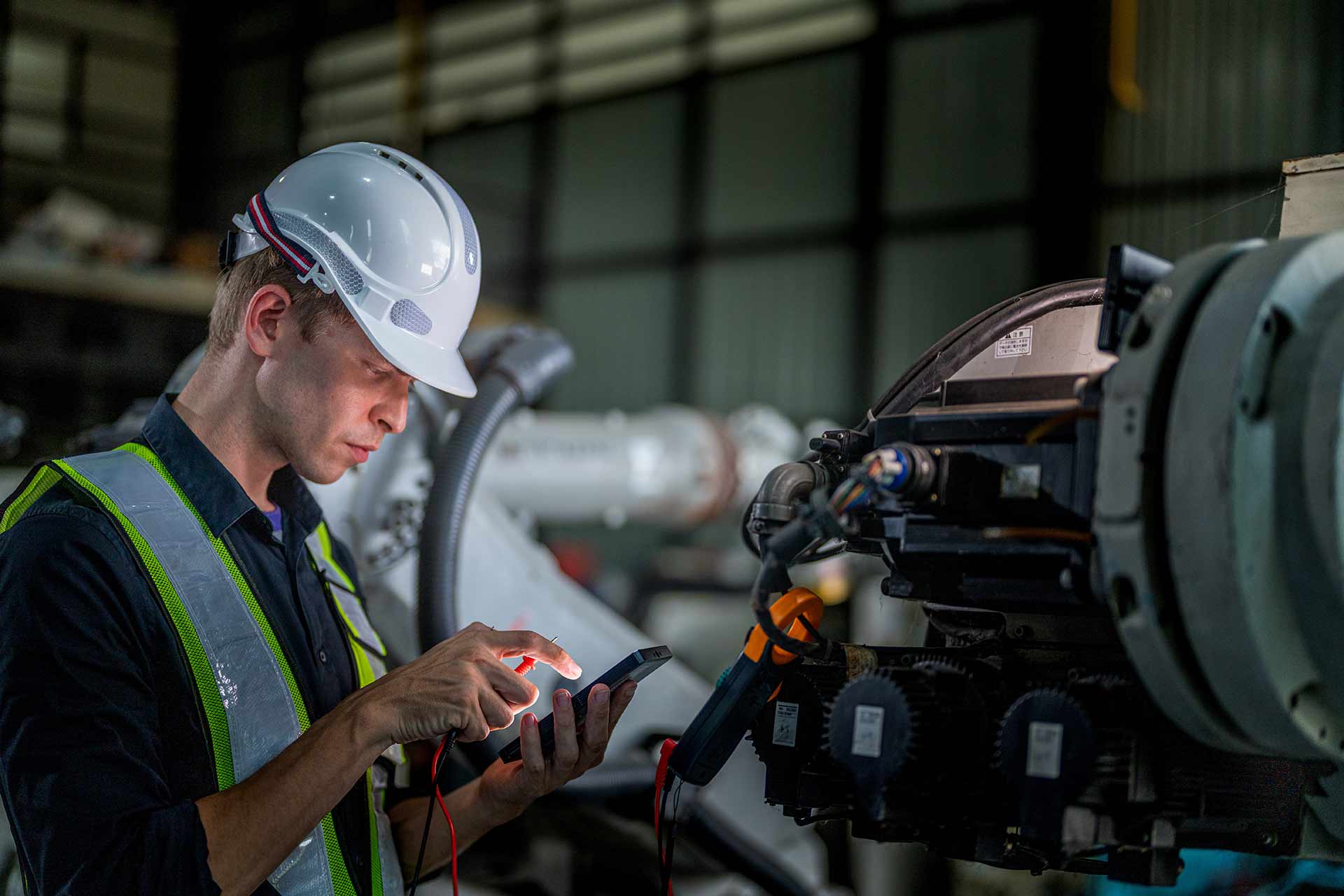
It starts with an assessment of the existing system: what still works, what must be replaced, and what constraints cannot be changed (geometry, interfaces, regulations). This phase usually involves dismantling, measuring, and documenting parts that were never meant to be reproduced. For most systems, dimensional measurements can be done with a calibrated caliper or 3D scanning systems that we use at Tiger Parts. Most technologies now end up measuring as precisely as 50 microns!
Then comes the design phase. New components must be adapted to existing ones, which almost always requires reverse engineering. Interfaces are redesigned, loads recalculated, tolerances adjusted, and materials selected to ensure long-term reliability. Very often, some parts can just be re-manufacturing identicallybut some adjustments lead to redesigns…and thus custom manufacturing.
Once the design is validated, manufacturing begins. Very often, CNC machining, Multi Jet Fusion or SLS technologies are used to produce adapters, mounts, housings, and structural parts with the precision required to safely integrate old and new components. Some of the parts that need precise fitting also need to be inspected dimensionally after production. Final assembly, fitting, and functional testing close the loop.
Why are custom parts a must have?
At the beginning of a retrofit project, the assumption is often “we’ll find a standard adapter.” but reality usually looks like this:
- hole patterns don’t match
- shaft heights are off
- mechanical loads are different
- OEM parts are obsolete, discontinued, or overpriced
The result is often that new mechanical interfaces must be created, mounts redesigned and some components remanufactured. This is where the combination of reverse engineering and custom part manufacturing becomes essential.
Retrofit is not a linear process. Iterations are normal. Small adjustments during assembly are expected. This is exactly why flexible, on-demand custom manufacturing is so critical to the success of retrofit projects.
Pricing for a retrofit
Retrofit pricing is often perceived as unpredictable, but in reality, costs follow a clear structure.
The main cost drivers are:
– engineering and reverse engineering time
– number of custom parts required
– material selection and machining complexity
– certification, testing, and compliance upgrades
Custom parts are not expensive because they are custom. Especially if the retrofit applies to a fleet of vehicles or a series of similar machines. In that context, fixed costs can easily get absorbed.
Compared to full replacement, retrofit remains highly cost-effective. Extending the life of an existing system avoids structural rebuilds, long qualification phases, and massive capital expenses. In many cases, retrofit is the only economically viable option to stay compliant, operational, and competitive.
| Cost Category | What It Covers | Typical Cost Range (€) | Notes / Cost Drivers |
| Electric Motor | Traction motor, mounting adapters | 2,000 – 4,000 | Power level (50–150 kW), cooling, motor type (AC induction vs PMSM) |
| Motor Controller / Inverter | Power electronics & control unit | 1,500 – 3,000 | Automotive-grade components raise cost |
| Battery Pack | Cells, casing, BMS, cabling | 5,000 – 8,000 | Capacity (20–40 kWh), chemistry (LFP cheaper than NMC) |
| Onboard Charger | AC charging module | 800 – 1,500 | Single vs three-phase |
| DC-DC Converter | High → low voltage (12V) | 400 – 800 | Required for vehicle electronics |
| Cooling System Adaptation | Pumps, hoses, radiators | 500 – 1,200 | Often underestimated |
| Wiring & Safety Components | HV cables, fuses, contactors | 600 – 1,200 | Mandatory for compliance |
| Subtotal – Hardware (Certified Kit) | 12,000 – 18,000 | Matches market prices you mentioned |
For car renovation, certified electric conversion kits can now be found for around 10 000 €, which makes it a pretty affordable option when you want to drive electric in an old classic car. You also need to include your budget installation fees that vary from 800 € and 2500 € depending on the model.
If you decide to create your own kit, be careful with the certification costs that also add to the whole project costs. More formal homologation fees (e.g., UTAC fees in France) specifically for conversions can range from roughly €1,500 – €3,000 depending on complexity and technical documentation requirements.
How Tiger Parts can help you with your retrofit projects
At Tiger Parts, retrofit is not an exception. It’s the core use case we build our services for.
We help retrofit projects by providing:
– fast reverse engineering from physical parts
– production-ready CAD adapted to real-world constraints
– CNC machining or 3D printing for one-off, small, and medium series parts
– access to a distributed network of qualified manufacturing partners
– consistent quality and documentation
Whether you need a single adapter plate or a full set of custom mechanical interfaces, we make sure parts are manufacturable, delivered fast, and fit right the first time.
Retrofit is about extending value instead of replacing everything. We help you make that extension possible without too much hassle.
Conclusion: Retrofit only works if parts fit reality
Retrofit is never theoretical. It deals with worn interfaces, undocumented geometries, discontinued OEM parts, and real mechanical constraints. Off-the-shelf solutions almost never fit. Custom-manufactured parts are what make the connection between old systems and new technologies possible.
When done right, retrofit extends asset lifetime, reduces capital expenditure, and dramatically lowers environmental impact. But it only works when mechanical reality is respected.
Ready to start your retrofit project?
If you are facing obsolete parts, mismatched interfaces, or a modernization project that cannot rely on catalog components, Tiger Parts can support you,from reverse engineering to CNC machining.